When Ownership Changes Hands, the Story Matters
The events industry is predominantly run by founder-led studios, planners, production companies, and venues that grew on reputation in an age when access to capital came from banks alone. Many of those founders are now asking what comes next - succession, retirement, a growth partner, or a merger that lets two strong teams do more together. A business built over twenty years on one person's taste and relationships now may have more options to consider: a full sale, a minority partnership, a merger with a complementary studio, or a considered handoff to the next generation.
The buyers are changing, too. Private equity and strategic acquirers have been increased interest in event agencies, rentals, and venue groups, and family capital is joining them with a different kind of appetite. Selling, buying, and partnering are all in motion at once.
Each is more than just a financial decision and the choice marks a significant company milestone that demands a considered, tactful communications plan to outlast the transition itself.
The Deal Is Only Half the Story
On the selling side, founders with strong brands, loyal clients, and clean operations are being approached more often - and many are taking those calls seriously for the first time. On the buying side, operators and investors are looking at well-run businesses as an alternative to crowded, expensive deals, with the added appeal of real client relationships and a reputation that is difficult to replicate.
A buyer can acquire contracts, equipment, and intellectual property, but maintaining the confidence of a longtime client or the loyalty of a talented team requires something more. Whether a founder is selling, a studio is acquiring, or two companies are exploring a partnership, the deal itself is only half the story. The other half is how the news lands with clients, teams, vendors, and press.
In our work advising founders and executive teams, we often find that the most important communications questions arise long before an announcement is made. Who needs to hear the news first? What will employees worry about? Will longtime clients wonder whether the experience they've come to expect is about to change? What does a founder's departure mean for the people who built their careers alongside them?
These questions deserve more than a carefully worded press release. They require a strategy that anticipates how people will receive the news, prepares leadership to respond honestly, and makes room for the uncertainty that naturally accompanies change.
A thoughtful communications strategy is not a luxury but a responsibility. Get it wrong, and a brand risks eroding the equity, relationships, and goodwill it has spent decades building. Get it right, and a moment of uncertainty can become an opportunity to reinforce the very qualities that made the business valuable in the first place.
We counsel our clients on more than just the words they are using to share these updates, but also how to live through the values of their brand in the months and years that follow a big transition. After all, the responsibility doesn't end when the announcement goes live. The promises made during a transition must be reflected in how the business operates long afterward.
Why Partnerships and Purchases Are About to Feel Ordinary
We expect acquisitions and partnerships to feel increasingly ordinary in luxury hospitality and events within a few years. Not because deals are suddenly easy, but because the forces behind them are hard to ignore.
Succession planning is here. A generation of founders now need an exit that protects their name and their team. About 6 million businesses have to transfer hands right now, many are too small for Private Equity. The cost of capital has gone up, and private equity activity has slowed down because some of the companies in their portfolio are struggling to produce returns. Family Offices are looking at mid-sized or small businesses that present healthy long-term growth. Capable buyers are looking at well-run, founder-led businesses, and plenty of people watching want to know how to take part.
Evaluation is holistic. Investors evaluate the differentiation of that company in their market, the returning customer, and the ability for the business to scale beyond its founder (which often relies on the overall health of their business systems). A company's ability to fulfill those criteria signals to a Family Office that the brand may be worth further consideration. They are looking for brands they can help reach their fullest potential. Successors are evaluating the opportunity to grow a company, leverage debt, and take advantage of new market opportunities with a fresh lens.
Scale has become an advantage. Shared sourcing, technology, talent, and reach help independent brands compete and continue to grow without losing their point of view. For companies operating in multiple markets, the ability to share infrastructure while maintaining local expertise can be particularly compelling.
Capital, in some instances, can be patient. Traditional private equity and venture capital funds typically operate on strict 5- to 10-year horizons, after which they are pressured to sell or liquidate holdings to return cash to limited partners. Family offices, by contrast, have no fixed fund clocks or expiration dates; they can hold an investment for one year, 20+ years, or indefinitely. Ultimately, access to capital is just one element of investment or succession planning. The best 'matches' are between investment groups and brands with a shared philosophy and aligned expectations for what the partnership will offer both parties today, tomorrow and into the future.
Because acquisitions in the luxury event industry have been few and far between, the process can feel unfamiliar to many founders now at the point of succession planning. With more open dialogue, the question shifts from whether to do a deal to how to do it well. That is where communication decides the outcome.
Our client - a national leader in design, rentals and production - began expanding its portfolio through strategic acquisitions and one principle guided the strategy: the businesses joining the company would retain the identities, relationships, and regional expertise that made them leading partners and specialists in their fields.
Working alongside the company and its leadership beginning in 2025, our role was to help translate that philosophy into a clear and consistent narrative, one that could speak to employees, clients, creative partners, and the broader industry. The challenge was not simply announcing growth, it was demonstrating how independently respected brands could benefit from shared resources, operational infrastructure, and executive support without losing the qualities that made them distinctive. As the company continued to expand, that commitment became a recurring theme; partnership was always the North Star.
The lesson extends beyond any one acquisition: when a company purchases a respected brand, it also inherits expectations about what that brand stands for. The communications strategy must account for both.
How We Think About Executive Communications
In a merger, acquisition, or sale, the founder and executive voices are the anchor. Clients, teams, and partners want to hear from the people they trust - and they want to hear it first. Our approach comes down to three principles:
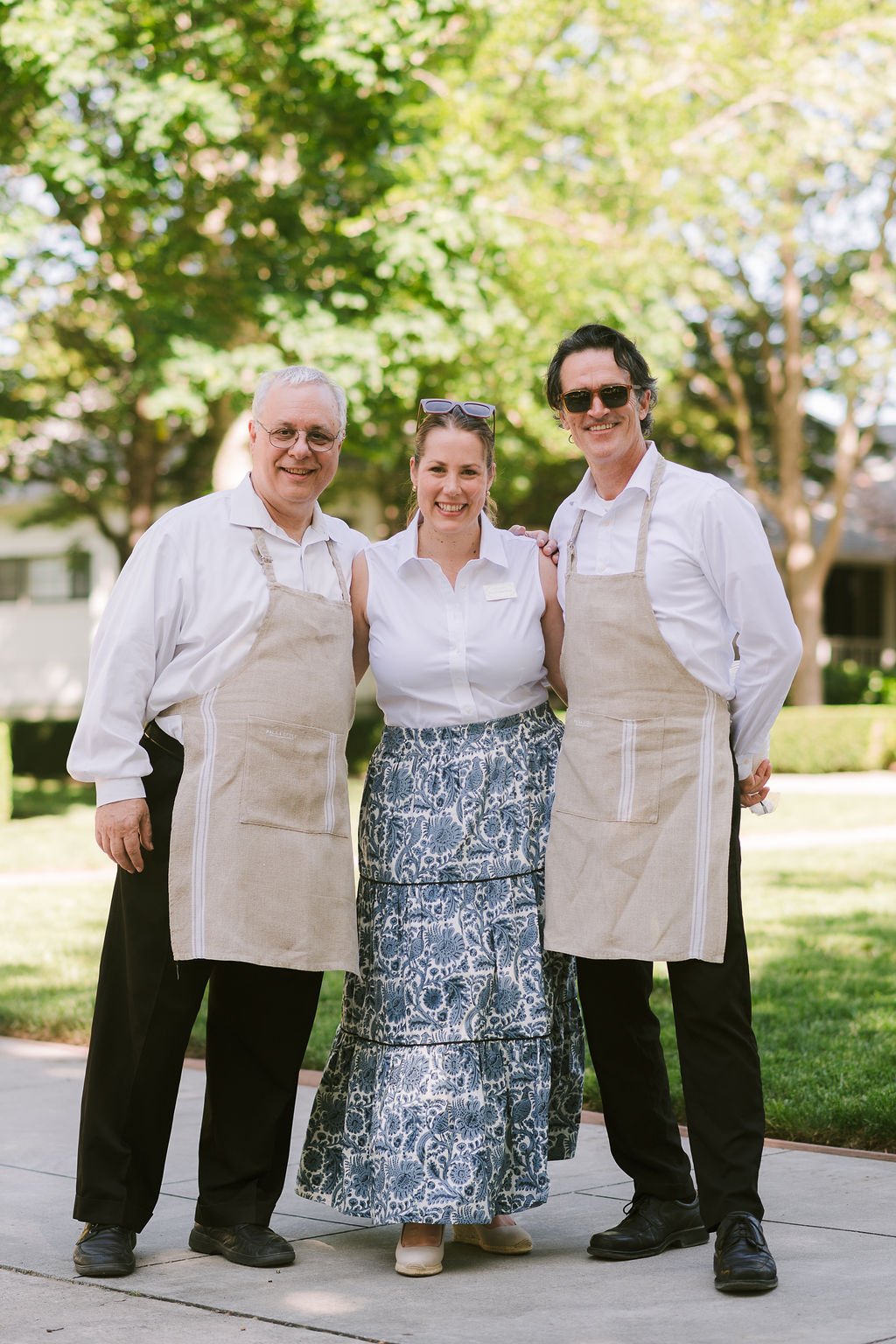
Nancy Parragué Barclay, Partner, and members of the Paula LeDuc Fine Catering & Events team. Photo by Melanie Duerkopp
Sequence the audiences. Employees, clients, vendors, and partners should hear the news in a deliberate order, before press or social media do. This is where your relationship capital is put to the test; personalizing those outreach points is indicative of where those relationships stand in your ecosystem. Every group of relationships will require a different level of visibility than the next, and a different set of potential responses to questions. Plan ahead, don't get flat-footed.
Protect the brand legacy. The announcement honors what was built, makes clear what stays the same, and enthusiastically outlines the relevant and timely changes that may affect those closest to the business. Communicating this all with confidence and care is essential to extending the goodwill of one brand onto another. This is especially important when the founder's personal reputation has become inseparable from the company's identity.
Give new leadership a point of view: New owners and partners need a story about where the company is going, not only a statement that a deal closed. Done well, these plans feel like a natural continuation of a company's overarching narrative - rather than a transactional 'add-on.' The community at large should be able to recognize how the new perspectives and expertise will bolster the brand(s) and what that asset could unlock for those involved at every level.
These principles were particularly important when Paula LeDuc sold her company, Paula LeDuc Fine Catering & Events, to four chief partners and longtime executives in 2022. This attention to sequencing was vital to the success of the transition, starting from within the walls of this prestigious brand. In a company with hundreds of employees and thousands of partners and clients, no two messages were the same. As the brand’s strategic advisor in the term just following the sale, our focus was on re-invigorating a clear vision for their committed workforce and establishing executive leadership priorities. At the same time, we were crafting strategies for the sales team to communicate the exciting changes to clients, creative partners, and venues that honored the relationships they had built for nearly four decades, while introducing the new executive visionaries carrying the brand into its next season of growth.
As more founders consider their next chapter and new investors enter the industry, these conversations will only become more common. And while every transaction will look different, the opportunity to approach change with intention is one that every business can prepare for.